
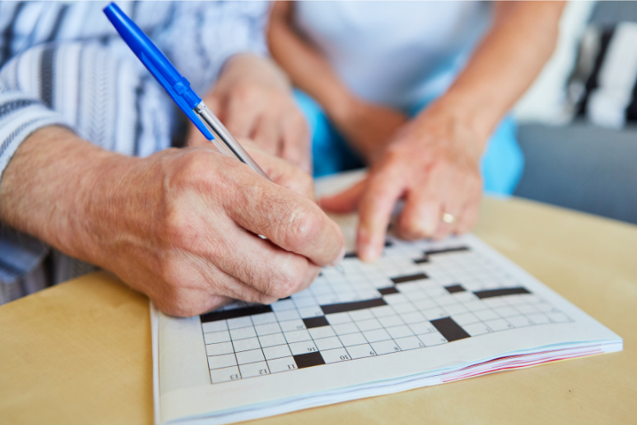
Keeping the brain active is an important part of healthy aging. Just like the body benefits from regular movement, the brain benefits from activities that encourage thinking, remembering, problem-solving and creativity. Fortunately, supporting cognitive health doesn’t have to feel like work. Puzzles, games and hobbies can provide enjoyable ways for older adults to challenge their minds while also having fun.
Put Your Brain to Work with Puzzles
Puzzles are a simple and accessible way to exercise different areas of the brain. Crossword puzzles encourage vocabulary and memory, while Sudoku helps with logical thinking and concentration. Jigsaw puzzles can support visual-spatial skills, attention to detail and problem-solving.
Word searches, matching games and brain-training activities can also provide a mental workout. The key is choosing something enjoyable and appropriately challenging. A puzzle should make you think without becoming frustrated.
Enjoy Games with Friends
Games can benefit cognitive health while also encouraging social connection. Card games such as bridge, pinochle, Uno or solitaire require players to remember rules, make decisions and pay attention. Board games such as Scrabble, checkers, chess and backgammon can encourage strategic thinking and problem-solving.
Playing games with other people offers an additional benefit: conversation and laughter. Social interaction is an important part of overall well-being and can help older adults feel connected and engaged.
Explore Creative Hobbies
Cognitive stimulation isn’t limited to traditional brain games. Creative hobbies can challenge the mind in meaningful ways. Painting, drawing, knitting, crocheting, woodworking, photography and playing a musical instrument all require concentration, coordination and learning.
Writing is another wonderful option. Keeping a journal, writing stories or poems, or recording family memories can encourage reflection and help preserve important memories for future generations.
Learn Something New
One of the best ways to keep the brain engaged is to continue learning. Older adults might try learning a new recipe, exploring a new craft, taking up gardening or learning basic phrases in another language. Even learning how to use a new piece of technology can provide a worthwhile mental challenge.
The goal isn’t to become an expert. It’s about trying something new, staying curious and giving the brain opportunities to make new connections.
Make It Fun and Social
The best cognitive activities are the ones you enjoy. Whether it’s completing a crossword over morning coffee, joining a weekly card game or spending an afternoon working on a craft project, hobbies can bring purpose and enjoyment to everyday life.
At any age, learning, creating, playing and connecting with others can help keep life interesting—and give the brain a reason to stay engaged.